




Dyeing with the plants from your garden or vegetable patch is a way to reconnect with an ancient and poetic craft, inherited from the dyers and herbalists of the past. At Zollinger Bio, we have long been striving to preserve the seeds of these plants that our ancestors used in their daily lives. We invite you to rediscover seven dye plants, once cultivated in the Swiss countryside, to create your own natural dyes at home.
Long before the era of synthetic colors, farmers, weavers, and herbalists knew how to draw from the garden a whole palette of yellows, reds, blues, and oranges. The yellow from weld, the blue from woad, or the reds from beets structured trade exchanges, social codes, and artisanal traditions. These natural pigments, obtained through rigorous processes, were valued for their ability to reflect the seasons, local know-how, and the gestures of the dyer. Rediscovering plant dyeing today is to reconnect with a technical and cultural heritage deeply rooted in agriculture and gardening.
The best dye plants for beginners
If you want to start your first homemade dyes, here are the 7 plants we recommend for their ease of cultivation and use.
Sun plant, safflower first produces a warm yellow, then a delicate pink depending on the pH of the water. Japanese artisans used it for their precious fabrics.
Extraction
Soak the dried petals for 24 hours in warm water. Strain: the first bath is yellow. Add a little baking soda to reveal a soft pink.
Use
Dye silk or make pink vegetable inks.
Its light flowers illuminate the flowerbeds as much as the fabrics! A bath of Coreopsis gives a deep golden yellow, close to honey.
Extraction
Boil the flowers for 30 to 40 minutes. Strain and add your fiber (linen, cotton, wool). Set with alum for a nice hold.
Use
Ideal for dyeing natural linen fabric or handmade paper.
The Reseda, also known as "yellowing herb," was cultivated throughout Europe in the Middle Ages. Its yellow remains one of the most lightfast.
Extraction
Boil the flowering stems for 1 hour. Strain and immerse your mordanted fibers.
Use
For a stable and vibrant shade on hand-spun wool yarns.
Woad was for a long time the main source of blue before tropical indigo. A noble pigment, obtained through the natural fermentation of leaves.
Extraction
Crush the leaves and let them ferment for 3 to 5 days. Beat the liquid to bring out the blue. Filter and dry the pigment.
Use
Cotton dyeing or creating a handmade blue watercolor.
Marigolds bring an explosion of sunshine to the garden and a cheerful, fresh hue to the workshop.
Extraction
Boil the fresh flowers for 1 hour. Strain and immerse the fabric.
Use
Excellent for dyeing Swiss wool yarn or decorating handmade paper.
Onion peels provide a simple natural dye, often used by grandmothers to color Easter eggs.
Extraction
Boil the peels for 1 hour. Strain and soak the fabric.
Use
Dye a linen cloth, or give a golden patina to a hand-bound notebook.
The beet gives a bright, changing red that softens when dried. It is the dye of artists and curious children.
Extraction
Grate the root. Heat gently without boiling. Strain.
Use
Create a plant-based ink for writing or drawing.
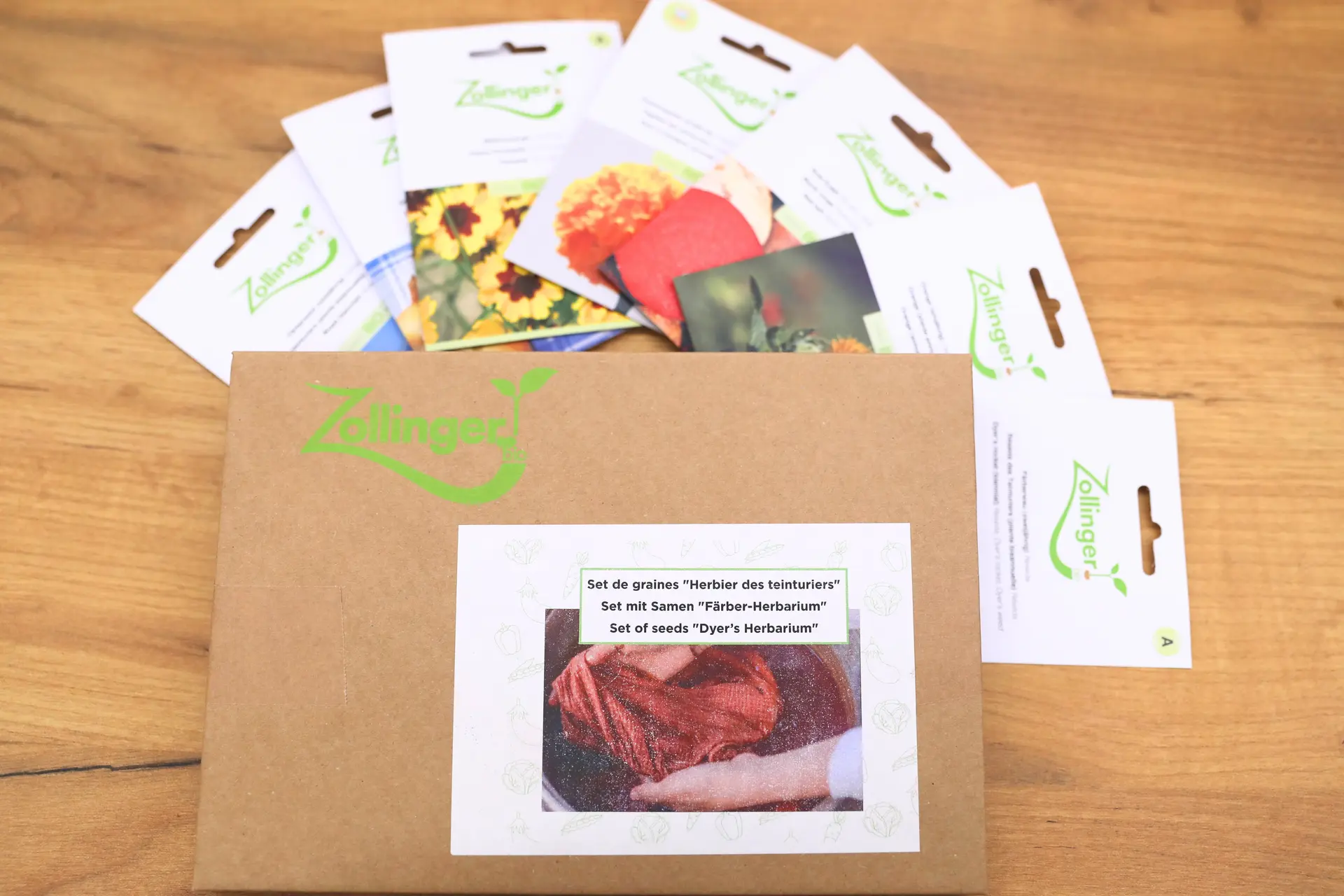
Get started with the cultivation of dye plants with our "Herbarium of Dyers" kit!
This complete kit includes 7 packets of organic seeds to grow your dye plants in the garden or vegetable patch. In addition to providing a splendid bloom and attracting beneficial insects for your crops, you can harvest them to enjoy great creative workshops with your family!
DiscoverHow to dye a textile with dye plants?
In summer, the flowers of Tagetes, Coreopsis, and Reseda make it easy to dye silk, wool, cotton, or linen with bright and natural yellows. This is perfect for adding a bit of color to linens, dish towels, scarves, or wool shawls! Here is a small tutorial on plant dyeing to achieve this, using dye plants grown in your garden.
Ingredients
You will need:
- A textile made from natural fibers (silk, wool, cotton, or linen)
- Dye plants of your choice (about 2 to 3 times the weight of the dry textile)
- Potassium alum: It is thanks to this entirely natural substance that the pigments will adhere permanently. To permanently fix natural pigments on textile fibers. You can find it in eco-friendly stores or those specializing in creative hobbies.
- Freshwater
- A pot dedicated to dyeing (stainless steel or enamelled)
- A wooden spoon
- A strainer or a cloth for filtering
- A container or a basin
- A neutral soap
Dying tutorial
- Wash the fabric with a mild soap, without fabric softener, then rinse thoroughly. Wring it out so that it remains damp.
- Prepare the mordant bath: dissolve the alum in hot water (at least 60 °C). For silk or wool, it is recommended to use about 10% of the weight of the dry textile. For cotton or linen, about 15% of the weight of the dry textile.
- Prepare the mordant: pour this solution into the pot, add enough water to cover the textile, then submerge the wet fabric. Heat gently and let it soak for 30 to 60 minutes, without boiling.
- Let cool and drain: turn off the heat, let it cool in the bath, then drain the fabric.
- Prepare the dye bath: in the pot, add the dye plants and cover generously with fresh water. Bring to a simmer and maintain for about 45 minutes.
- Strain the colored bath: remove the flowers using a strainer or cloth to keep only the colored liquid.
- Dye the fabric: immerse the still damp fabric in the dye bath. Keep warm (without boiling) for 30 to 60 minutes, stirring gently for an even color.
- Rinse with clear water until the rinse water is clear. Wring out without twisting and let dry in the shade, in the open air.
Good to know
- The longer the dyeing time, the more intense the color.
- The shade stabilizes permanently after a few days.
- Plant-based dyes do not spontaneously adhere to fabrics: the mordant creates a chemical bond between the fiber (silk, wool, cotton, or linen) and the color. One of the most commonly used mordants is potassium alum, valued for its effectiveness and relative mildness. Without a mordant, the color may be pale or fade quickly with washing and exposure to light; with appropriate mordanting, the hue gains in intensity and durability over time.
- The same baths can be reused for lighter shades.
To go further
To learn more about the fascinating history of dyers or the various possibilities offered by the dye plants in the garden, check out our dedicated fact sheet!
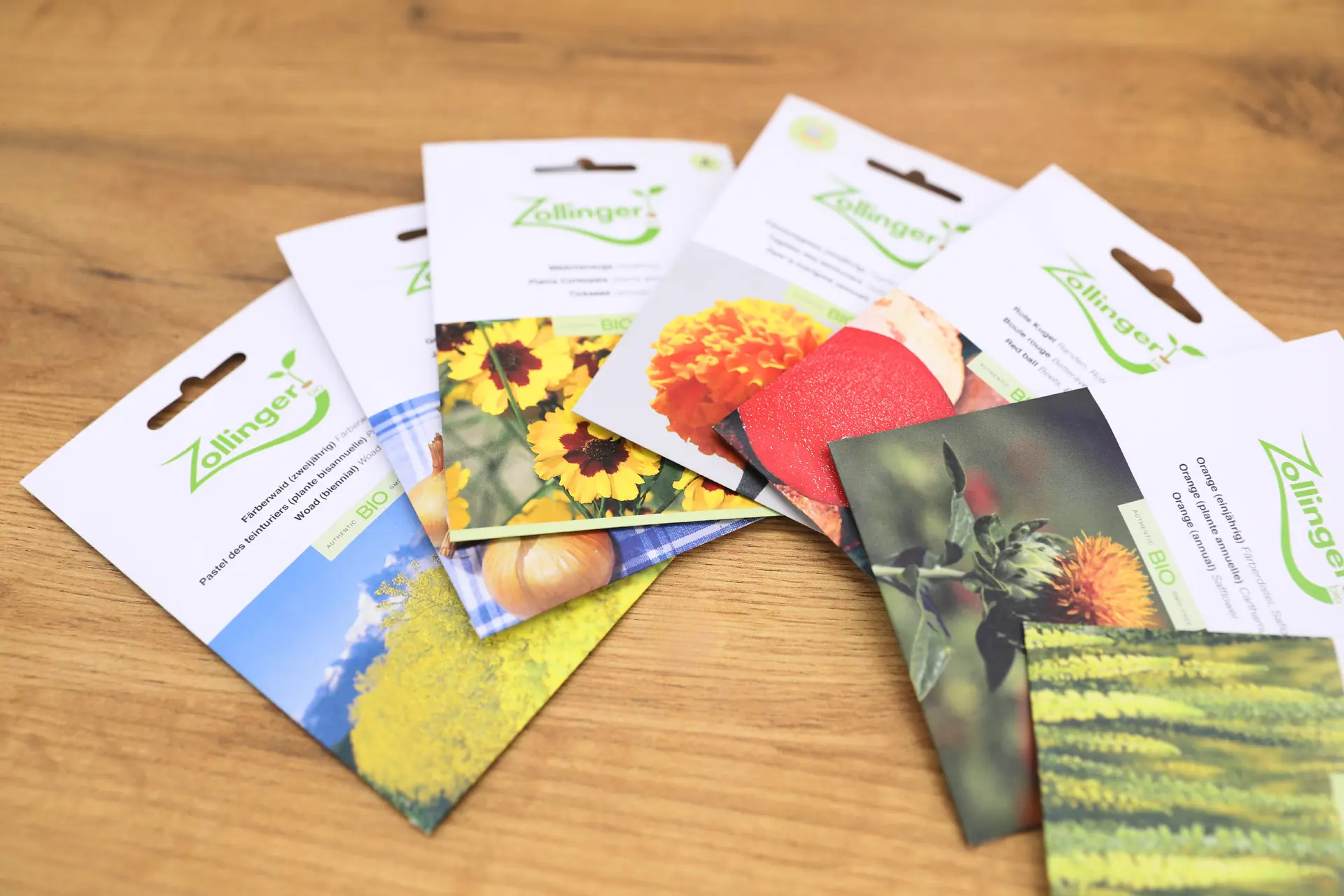
Organic seeds of dye plants Zollinger Bio
Download the sheet on dye plants in the vegetable garden
You can also check the following articles:
Dye Plants in the Garden: Creating Natural Pigments from Organic Seeds