





It's summer. It's hot. The first cucumbers from the vegetable garden are ripening and you're already looking forward to that first refreshing salad. And then disaster strikes: the cucumbers are bitter and absolutely indigestible! Good news: this bitter taste generally has nothing to do with the quality of your seeds. In this article, discover why your cucumbers turn bitter, how to address it right now, and above all how to avoid it next season.
Why do cucumbers turn bitter?
At Zollinger Bio, we have been selecting and multiplying seeds of squash, courgettes and other cucurbitsfor over 40 years. We know well that bitterness in a squash or courgette is never trivial. That is why we advise you to follow the recommendations of Tox Info Suisse: always taste a small raw piece before cooking it, and discard the fruit at the slightest doubt. This warning applies to all fruits in the cucurbit family: squash, courgettes, pumpkins, patty pans…
Fortunately, all modern varieties, such as those we select at Zollinger Bio, are free from cucurbitacin. Nevertheless, bitterness can reappear under certain conditions.
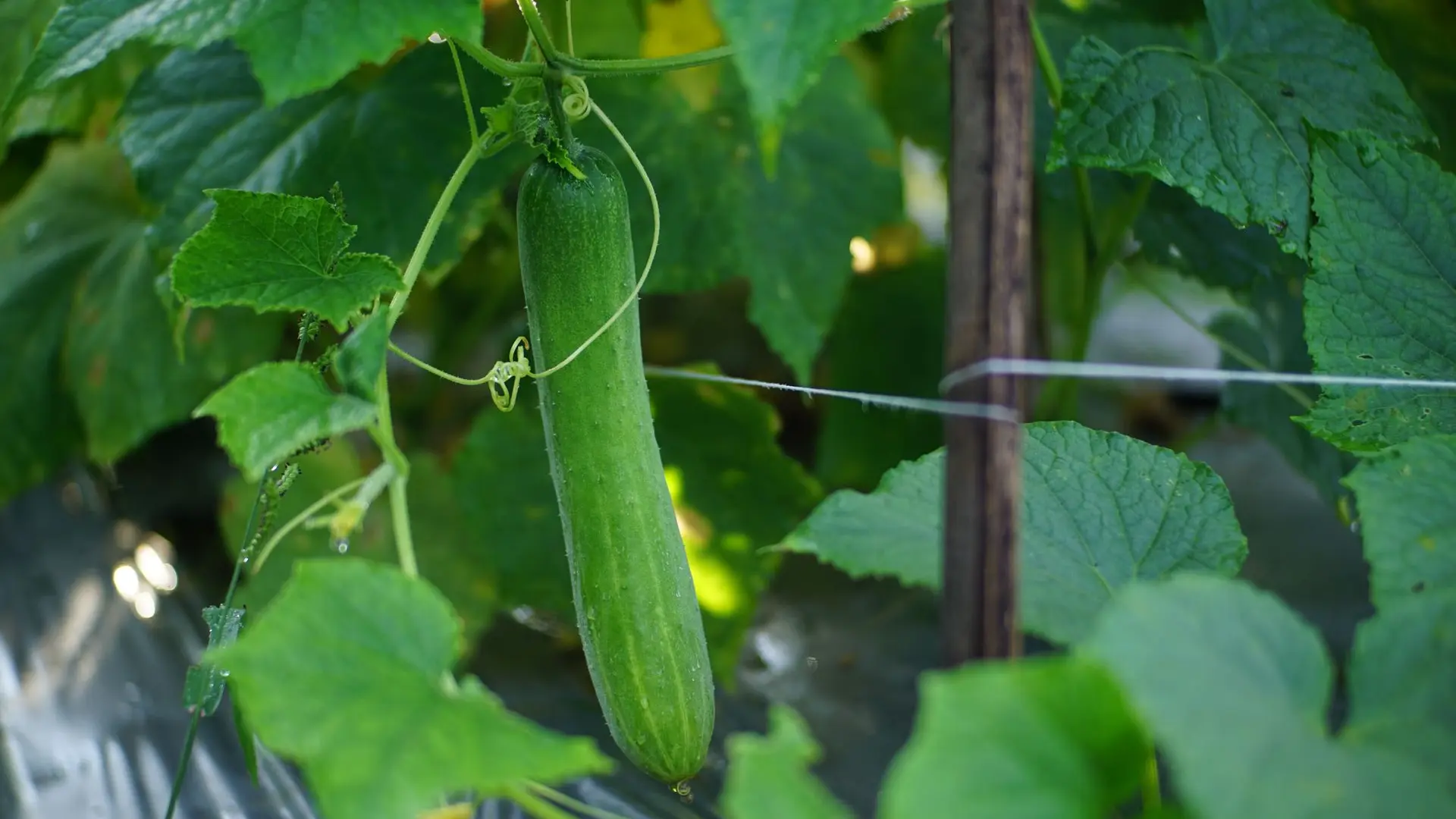
A cucumber plant in the garden.
Causes and solutions
Heat
Heat is the main cause of bitterness in cucumbers. Cucurbitacin is heat-resistant and develops when the plant is subjected to high temperatures. We advise planting cucumbers in a slightly shaded spot to reduce excessive heat in summer.
Irregular watering
If the plant goes through periods of drought and excessive irrigation, water stress is created. This stress leads to bitter cucumbers.
During periods of intense heat, we recommend light watering every 2 to 3 days (rather than heavy watering once a week) to maintain stable soil moisture and limit the stress responsible for bitterness. Watering with ollas is ideal. Mulching will also be a great help in maintaining soil moisture. At Zollinger Bio, we particularly appreciate sheep's wool mulch, which absorbs water like a sponge and gradually releases it back into the soil.
Temperature fluctuations
When temperatures vary considerably — for example during extremely hot days and cooler nights — cucurbitacin is produced. If plants are not too exposed to the sun, temperature variations will also be less pronounced.
That is why at Zollinger Bio we often recommend providing a little shade to crops, especially during the hottest hours of the day. For cucumbers, you can use an old white sheet held up by wooden or bamboo stakes, or shade netting. This might seem surprising, but from our experience it is very effective!
Now you know how to harvest delicious cucumbers without bitterness. For more tips on growing cucumbers, you can watch our video on successful sowing and avoiding bitterness problems in summer. Good luck and happy gardening!
Frequently asked questions
Consumed in large quantities, the compound responsible for the bitterness (cucurbitacin) can cause digestive problems that are sometimes serious. As a precaution, it is therefore preferable not to eat a bitter cucumber.
This is not recommended. The bitterness of a cucumber is most often linked to temporary climatic stress (heat, irregular watering) and does not affect the genetics of the seed — but it can also be a sign of cross-pollination with another cucurbit. In that case, the gene for cucurbitacin production can reactivate in the next generation, and the fruits from those seeds risk being even more bitter or even unfit for consumption. As a precaution, it is better not to re-sow seeds from a bitter fruit and to use certified organic seeds of controlled origin for the following season.
If a cucumber is too bitter to eat, it doesn't have to end up in the bin. You can put it in your compost — this presents no risk for your future harvests.
Never give it to your pets (rabbits, hens, etc.), even cooked, as cooking does not destroy cucurbitacin.
Cucurbitacin concentrates mainly under the skin and near the stem end. Peeling the fruit and cutting off both ends generously often reduces the bitterness, but does not guarantee its complete disappearance if the fruit is severely affected. We therefore advise not eating it at all — whether cut, peeled or cooked.
Further reading
- In the garden, a fleece that’s causing a stir, Charline Daujat, Terre&Nature: https://www.terrenature.ch/jardin/au-jardin-une-toison-qui-fait-sensation/
- Tox Info Switzerland, Bitter squashes and courgettes: https://www.toxinfo.ch/courge_potiron_potimarron_citrouille_courgette_amer
My cucumbers are bitter!