





This is a first at Zollinger Bio: following your numerous requests, organic sweet potato plants are finally making their debut in our catalog this year! Discover in this article everything you need to know to successfully grow them in your organic vegetable garden or on your balcony.
The sweet potato, a great traveler
Originating from the Americas, it is believed to have been domesticated around 4,500 BCE, between the Yucatán and Venezuela. It was already being cultivated for its sweet roots, called "batatas," from which the word "potato" is derived. Researchers from Oxford showed in 2018 that the sweet potato may have appeared at least 800,000 years ago. How it then colonized the Pacific remains an open question: was it a natural journey carried by currents or birds, or was it transported by Polynesian navigators? The debate remains open among scientists...
When and how to plant sweet potatoes
The sweet potato is an exotic species of the Ipomoea family Ipomeas. She loves warmth and sunshine, and therefore usually doesn't get planted until mid-May, at the end of the Ice Saints. If you are in a cool region or at a high altitude, you might even want to wait until mid-June and choose the sunniest spot in your garden.
Before planting, prepare your soil well: bring a good bucket of mature compost per plant, as well as a fertilizer for vegetables. If your soil is clayey and tends to retain water, create mounds. Sweet potatoes indeed dislike standing moisture.
Space the plants 30 to 40 cm apart, and 80 to 100 cm between the rows. When the stems reach about twenty centimeters, hill them slightly: this anchors the root system and encourages tuber formation.
Do not place your sweet potatoes too close to very greedy vegetables like tomatoes, eggplants or pumpkins. They could compete for nutrients.
Sweet potatoes grow very well in Switzerland. Research has even been conducted by Agroscope — the federal center for agricultural research. Several techniques have been tested to compensate for the lack of heat: straw mulching, micro-perforated black tarps to warm the soil, and protective covers over the plants. The result: tubers weighing up to 2 kg produced outdoors. Agroscope has also established a collection of more than 15 varieties preserved in vitro at Changins, protected from any viruses or fungi, in order to eventually provide certified plant material for Swiss producers.
Plant associations with sweet potato
Due to its versatility, sweet potato can be grown near many other garden crops.
- If you make it crawl, it will serve as mulch for the beans or peas. If you want to create a colorful flower bed on a small wall, you can intersperse seedlings between the plants of marigold, sunflowers, Nasturtium or zinnias.
- Grown vertically, it will leave you space on the ground. Take advantage of it to install short-cycle plants like lettuce, radishes, or even some herbs basil, cilantro, parsley...
Properly caring for sweet potato plants
The sweet potato adapts to almost all gardens and spaces. If you let it crawl, it will form a dense mat with aerial roots, which will serve as mulching to neighboring crops. It is ideal near plants sensitive to water stress, such as tomatoes or peppers. You can also train it to grow upward by having it climb on a trellis, a railing, or a pergola. It does not have tendrils like cucumbers or peas, so be sure to equip yourself with strings and clips. It can thus reach up to nearly 4 meters and becomes very decorative with its small pink or purple flowers.
If you have a terrace or a balcony, you can also grow sweet potatoes! You will need a pot of at least 40 to 50 liters. Regularly add organic fertilizer and place the pot in full sunlight.
The diseases and pests of sweet potato
Slugs attack young leaves after planting, but they can be easily controlled with barriers or pellets. Voles, on the other hand, directly target the tubers. Ultrasonic emitters can keep them away. If a tuber is gnawed, cut off the damaged part and consume it quickly.
This plant is not very susceptible to diseases. Among the most common are root rot, downy mildew, fusarium wilt, and viruses affecting the foliage. These diseases can significantly reduce the yield and quality of the tubers if not properly managed. To prevent these issues, choose healthy plants, space the rows well, and regularly monitor for signs of infection. The use of organic methods, such as composting, rational watering, and the application of natural purines, helps strengthen the resistance of sweet potato plants while respecting the environment. This way, you will ensure a more abundant harvest.
Harvest and storage
The sweet potato has the characteristic of developing late in the season, starting in August. Count between 110 and 120 days from planting to harvest. The unmistakable sign is when the leaves turn yellow or pale. Then, slide a fork or spade under the base and gently lift it, being careful not to get too close to avoid piercing the tubers. Those that are damaged should be consumed first. After the harvest, sow a green manure without delay — your soil will thank you in the spring!
The sweet potato is not stored like a regular potato. That’s why it’s important to follow a few key steps before storing it in your kitchen:
- Start by letting them dry for 2 to 3 days outside, out of direct sunlight.
- Place them for about a week in a warm (around 25°C) and slightly humid place, like a sunroom. This step, called drying, develops the sugars and improves preservation.
- Then, store them between 13 and 16°C, in a dry, dark, and well-ventilated place (and not in a cellar or refrigerator, as they are sensitive to humidity). They will keep for up to 6 months.
Cuisine and nutritional benefits
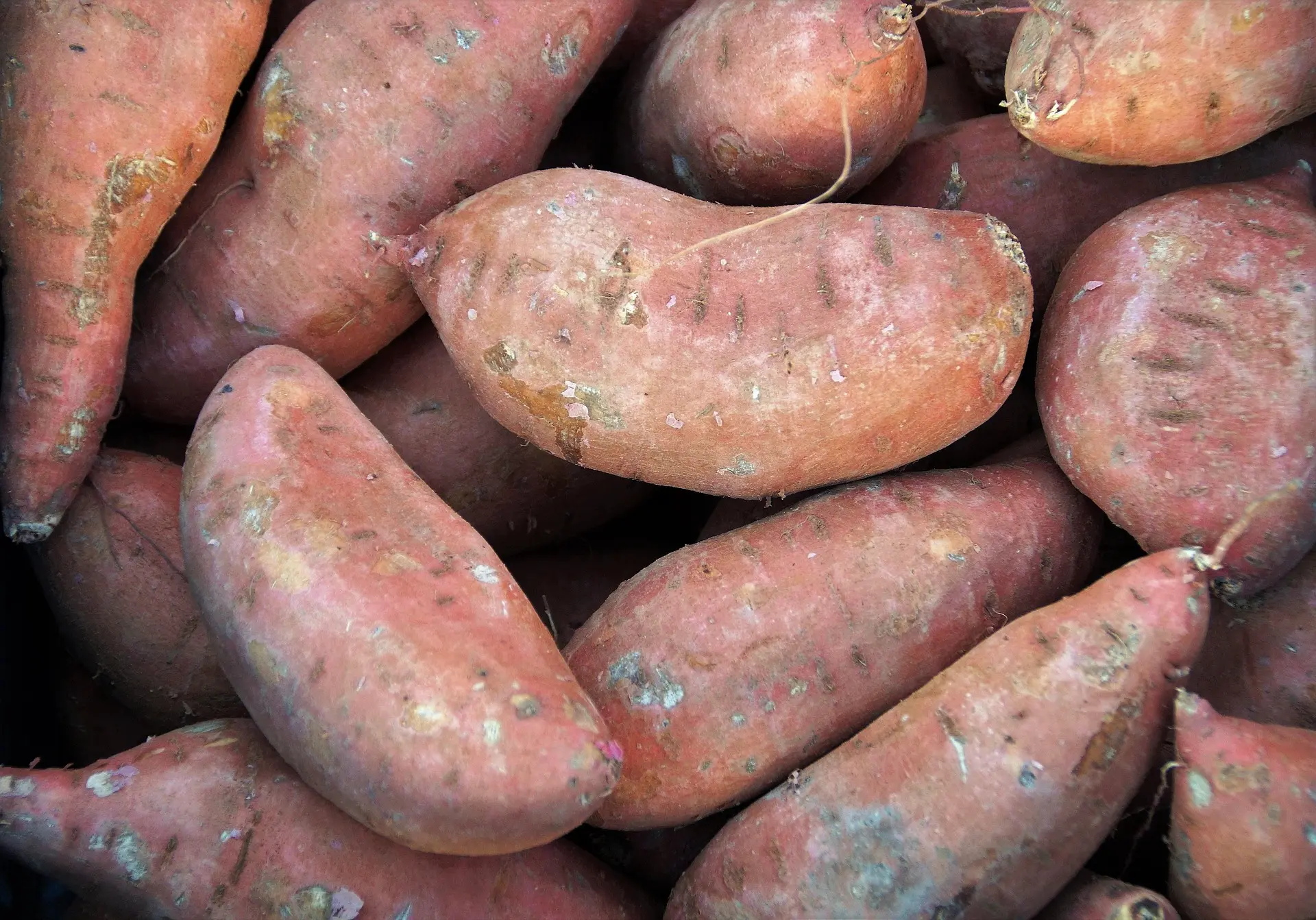
Sweet potatoes lend themselves to many recipes! Mashed, soups, stir-fries, fries, or casseroles... They are indeed one of the most interesting starchy foods. Their orange flesh is an exceptional source of beta-carotene — a precursor to vitamin A — which is beneficial for vision, skin, and immunity. They also provide vitamins C, B6, and E, as well as potassium, magnesium, and fiber that promote satiety and good digestion. Their moderate glycemic index makes them a well-tolerated food for people monitoring their blood sugar levels. Darker-fleshed varieties — pink or bright orange — are the richest in antioxidants, which protect cells from aging and reduce inflammation. However, a small precaution: people prone to kidney stones should moderate their consumption, as they contain oxalates.
Buy organic sweet potato seedlings
If this article has convinced you of the simplicity of growing sweet potatoes, know that we now offer certified organic seedlings on our seedling order site. You will find the varieties we have carefully selected to provide you with the best possible experience in your garden, and of course, on your plate!
Discover our organic sweet potato seedlings
To go further
- Agroscope, La patate douce (Ipomoea batatas L.)
- Radio Télévision Suisse. (2025). La carte blanche de Jacques Maillard
Frequently Asked Questions
Yes, it is a water-hungry plant, especially during the first two months after planting. Water regularly throughout the growing season to keep the soil moist, then reduce watering a little before harvest. The ideal method is drip irrigation, which targets the roots without saturating the surface.
Yes, and it's a shame that it's so little known here. In Asia and Africa, the leaves are sautéed with garlic and commonly consumed. They are rich in nutrients and completely edible. A great way to enjoy the plant even before the harvest.
Generally count between 3 and 6 tubers per plant, sometimes more depending on the conditions and the variety. Good exposure can significantly improve this yield.
Yes, with a few adaptations. Plant starting in mid-June, in the warmest spot in the garden (at the foot of a south-facing wall, sheltered slope). You can also warm the soil two to three weeks before planting with a black tarp. At the end of the season, if a cold snap threatens before harvest, a row cover placed over the plants can gain a few degrees and extend maturation. For really cool situations, the greenhouse remains the most reliable solution.
Growing sweet potatoes in your organic vegetable garden