





Dahlias are among the most generous flowers in the garden. From late July until the first frosts, they provide a continuous, spectacular bloom in an almost infinite variety of colors and shapes. To fully enjoy their flowering, follow this growing guide, from selecting varieties to wintering the tubers, including planting, maintenance, and harvesting the flowers.
Dahlias (Dahlia spp.) are plants native to the high plateaus of Mexico and Central America, where they grow naturally at altitudes of 1,500 to 3,000 meters. They belong to the Asteraceae family, like sunflowers, daisies, and echinaceas.
Unlike many other flowers, dahlias are not sown. Like potatoes or sweet potatoes, their tubers must be planted. These are storage organs that accumulate nutrients during the growing season, which will allow the plant to bloom again the following year. This fundamentally distinguishes dahlias from annual flowers that are reseeded every spring.
Which varieties of dahlias to choose?
Today, there are more than 20,000 registered varieties, grouped into about fifteen botanical classes based on the shape and structure of their flowers. From tiny pom-poms of 5 cm to spectacular giant decorative ones of 30 cm, there is something for every taste and every garden!
Dahlias come in many varieties: cactus dahlias with elongated and rolled petals, ball dahlias with perfectly spherical flowers, decorative dahlias with large generous pompons, single dahlias that are very attractive to pollinators, and even tiny pompon dahlias.
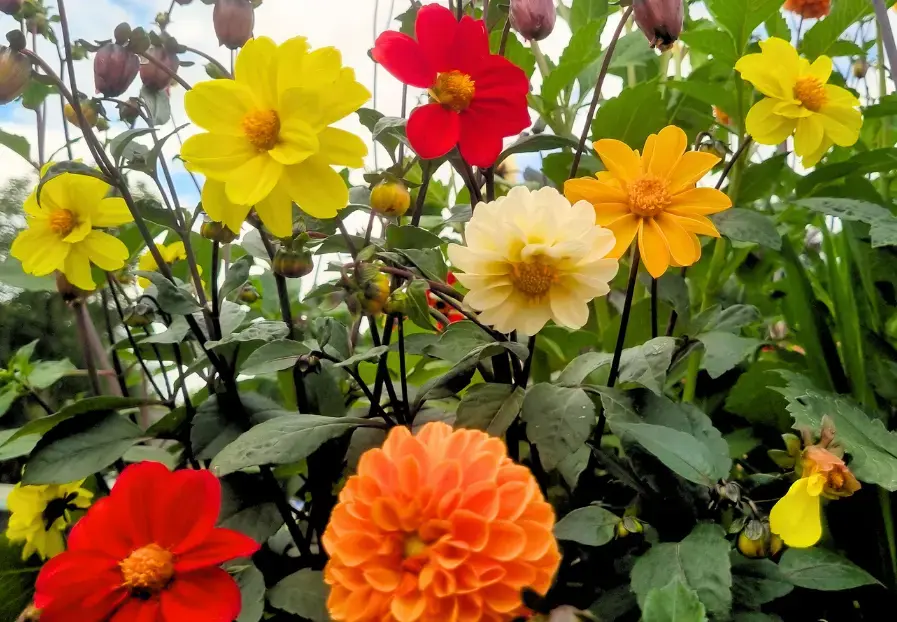
The varieties of open-centered dahlias are highly appreciated by insects
Here are some criteria for making a good choice.
- The mature size: some varieties exceed 1.80 m and require sturdy support. Others remain compact at 40–60 cm and are suitable for borders, balconies, and terraces.
- The color and shape: think about the harmony with the rest of your garden, vegetable patch, or balcony.
- The use of flowers: if you plan to cut them to make bouquets, choose varieties with long stems and double blooms, which last well for several days in water.
- Resistance: some varieties tolerate humidity and fungal diseases better than others.
Choose firm tubers, without visible mold, with at least one well-developed eye (bud). A soft or dried tuber will produce a weak plant. Prefer organic tubers to limit inputs on your land.
Discover our entire selection of organic dahlia tubers in our shop:
Where, when, and how to plant?
Planting season
In Switzerland, it is not recommended to plant dahlias in the ground before the risk of frost has completely passed. This usually corresponds to mid-May, after the Ice Saints. In mountainous regions, wait until the end of May or even early June, depending on the sunlight in your garden.
Location and soil type
Dahlias appreciate the soils:
- well-drained (they do not tolerate standing water, which causes tuber rot)
- rich in organic matter — incorporate well-rotted compost or well-decomposed manure to a depth of at least 30 cm
- slightly acidic to neutral (pH 6.0–7.0)
If your soil is heavy and clayey, add some sand to improve drainage, or plant your dahlias on small mounds to avoid standing water. Space 24 to 36 inches between plants for the large varieties, and 12 to 16 inches for the more compact ones.
Planting dahlia bulbs step by step
In open ground
- Dig a hole 15 to 20 cm deep. You can use a bulb planter to verify the exact depth.
- Place the tuber horizontally, flat and in contact with the ground. The nutrient reserves should be well spread out, like a star, and the eye (bud) should be facing upwards.
- Cover with 5 to 10 cm of soil. The bud should be level with the surface of the soil.
- If you are planting a large variety, install the support before covering it: this will help you avoid damaging the tuber later.
- Water lightly after planting. The soil should remain moist, but never soggy.
Container gardening
First, place a layer of drainage (clay balls, gravel, pumice, etc.) at the bottom of the container, then fill it with a rich and well-draining substrate. Plant the tuber 2–3 inches deep, with the eye facing up. Place the pot in a sheltered spot, in full sun: potted dahlias are more affected by wind than those planted in the ground.
Maintaining dahlias
Watering: once the stem has emerged (4 to 6 weeks after planting), water regularly and preferably at the base, to avoid wetting the foliage and limit the risk of fungal diseases. Dahlias prefer cool but not waterlogged soil. During periods of intense heat, mulching (straw, hay, shredded leaves) at the base of the plant reduces evaporation and regulates soil temperature.
Fertilization: Dahlias are hungry plants. At the beginning of the season (until the formation of buds), favor nitrogen inputs to stimulate growth. As soon as the first buds appear, switch to a fertilizer rich in potassium and phosphorus to promote flowering and the strength of the stems. Avoid excess nitrogen during full bloom: this encourages foliage at the expense of flowers. Organic fertilizers for flowers, whether solid or liquid, are perfectly suitable.
Staking: for tall varieties, staking is essential. Tie the stems as they grow using soft string or garden clips, without tying too tightly.
Pruning: regularly remove faded flowers to encourage the production of new buds and extend flowering until autumn. For bouquets, harvest the flowers early in the morning, just before they fully open, and place them immediately in fresh water.
Wintering: dahlias do not withstand prolonged frost. In Switzerland, it is essential to dig up the tubers before the first severe frosts, usually between late October and mid-November depending on the regions.
Pests and diseases of dahlias
Ravagers
- Slugs and snails are the number one enemies of young seedlings. Protect the plants at the beginning of the season with pellets or physical barriers, especially just after planting.
- Aphids concentrate on the tips of the stems. A strong jet of water is often enough to dislodge them. In case of infestation, apply natural products to repel them, while not forgetting to grow other flowers to attract ladybugs to your garden.
- Thrips sometimes cause discoloration and deformation of flowers. Encourage the presence of natural predators (lacewings, ladybugs) by diversifying your plantings.
Diseases
- Powdery mildew develops in dry and warm conditions. Good air circulation between plants and regular watering at the base are often enough to limit its occurrence.
- The rot of the collar and tubers is almost always due to excess moisture in the soil. Careful drainage at planting is the best prevention.
Enjoying the blooming of the dahlias
Dahlias are exceptional cut flowers. Here are 5 tips to enjoy their blooming in a vase:
- Cut your flowers early in the morning or in the evening, but never in full sunlight.
- Use scissors or a sharp, clean knife.
- Immerse the stems immediately in a bucket of cold water.
- Once at home, re-cut the stems at an angle under water before placing them in a vase.
- Change the water every two days and remove the leaves located below the waterline.
Cut dahlias generally last 5 to 8 days in a vase.
Dahlias and biodiversity
The varieties of single and semi-double dahlias, with their centers visible, are particularly appreciated by pollinating insects. Bees, bumblebees, and hoverflies frequent them diligently until autumn, a time when other flowers become scarce. In contrast, the very dense double-flowered varieties (pompons, cactus) offer little access to nectar and pollen. If biodiversity is a priority for you, alternate the two varieties in your flower beds.
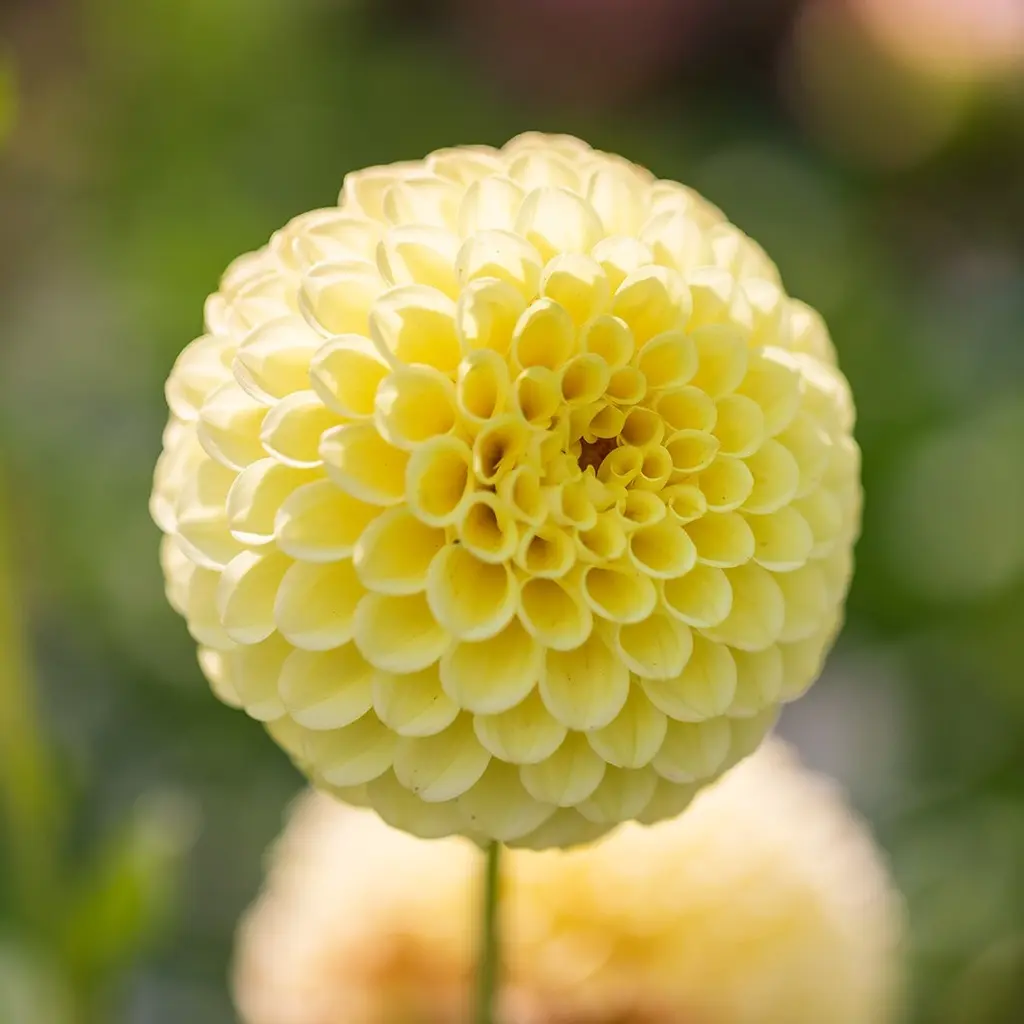

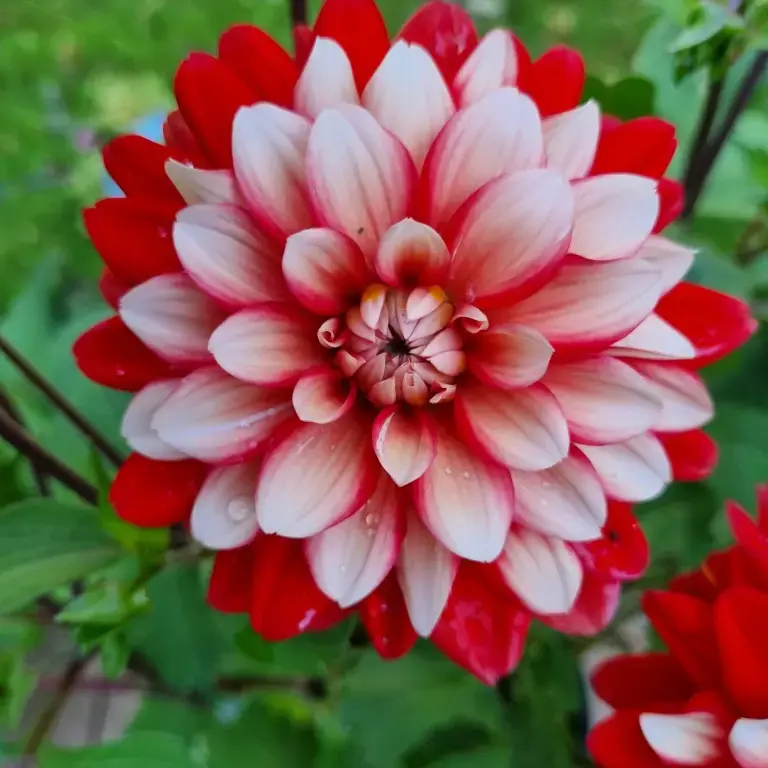
Variety of pompon dahlia, single dahlia, and decorative dahlia.
All varieties have their place in the organic garden, as long as diversity is present!
Dahlias generously reward the attention given to them. With well-prepared soil, regular watering, and a few simple maintenance steps, they transform the garden by late summer!
Frequently Asked Questions about Dahlias
Yes, the dahlia is a plant that loves full sun. Ideally, it needs 6 to 8 hours of direct sunlight per day to bloom abundantly. In shade or partial shade, the plant grows but produces far fewer flowers, and the stems tend to become leggy. This is also why locations at the foot of a south-facing wall or very sunny balconies are particularly well-suited for it.
Yes, provided that you dig up and store the tubers during the winter. In Switzerland, dahlias do not survive frost in the ground: they must be dug up before the first severe frosts (late October to mid-November), left to dry for a few days, and then stored in a frost-free place (5–8 °C) until spring. When replanted the following year, they grow back with even more vigor — and the clumps increase in size from one season to the next.
Dahlias are planted in the ground starting in mid-May, once the risk of frost has passed — ideally after the Ice Saints (May 11–13). Choose a location in full sun, well-exposed and sheltered from strong winds. They also adapt very well in pots or containers on a sunny balcony or terrace, provided you choose compact varieties and ensure good drainage.
In Switzerland and in most regions with cold winters, it is not recommended to leave tubers in the ground: prolonged frost destroys them. In regions with very mild winters, some gardeners leave them in place under a thick mulch of dead leaves or straw — but this is a risk. The safest method remains to dig up the tubers in the fall, let them dry, and store them in a dry, frost-free place until spring.
Learn more
- Société Nationale d'Horticulture de France (SNHF), Les dahlias
- Jardins de France, L'aventure du Dahlia
- Muséum National d'Histoire Naturelle (MNHN), Le déclin des pollinisateurs
How to grow dahlias: complete planting and care guide