




Le jardinage naturel attire de plus en plus de jardiniers soucieux de biodiversité, de résilience et d’équilibre écologique. Parmi les pratiques les plus efficaces, l’introduction de fleurs et espèces indigènes au potager ou au jardin est une solution simple pour favoriser les pollinisateurs, renforcer les écosystèmes et cultiver des plantes parfaitement adaptées au climat local qui ont souvent disparu de nos paysages.
Une plante indigène est une espèce présente naturellement dans une région sans intervention humaine directe, et ce depuis une longue période historique. À l’inverse, une espèce exotique (ou allochtone) a été introduite par l’activité humaine (volontairement ou non). On trouve parmi elles les archéophytes (introduites avant le 16e siècle) et les néophytes (introduites après les années 1500).
The majority of them integrate without disrupting ecosystems. The term "invasive neophyte" is used only when a plant rapidly competes with local species and causes measurable ecological, health, or economic changes.
In Switzerland, certain species such as Buddleia or Japanese knotweed are listed as problematic species and are subject to monitoring or management measures that vary by canton. Thus, of the approximately 4,000 species that make up Switzerland's wild flora, about 750 are neophytes, and only 88 of them are considered invasive or at risk.
Why cultivate native flowers and aromatic herbs in your garden?
- Ease of maintenance: these species are naturally better suited to our local conditions. They can therefore prove to be more resilient, requiring less maintenance or watering, even in rather poor soils.
- Resilience of the vegetable garden: some species of insects directly depend on local plants. By cultivating native flowers or herbs, you support the pollinators and beneficial insects that help naturally regulate your vegetable garden.
- Multifunctionality: these species are often both ornamental, honey-producing, and sometimes medicinal or edible...
- Biodiversity conservation: cultivating local species helps preserve local wildlife and flora.
Intégrer des fleurs et aromatiques indigènes au jardin permet d’obtenir un potager plus résilient et productif, tout en profitant de plantes à la fois ornementales, comestibles ou médicinales, adaptées au climat et favorables à la biodiversité locale.
What are the native species of Switzerland?
Native Flowers of Switzerland
Here are some particularly interesting native flowers to incorporate into a garden or natural vegetable patch.
- Bluebell: its edible flowers are perfect for decorating desserts and salads.
- Chamomile: very decorative, it is also known for its medicinal properties.
- Yarrow: its long-lasting bloom is ideal for bouquets and attracts many beneficial insects.
- White Laceflower: a nectar-rich plant that attracts a wide variety of pollinators.
- Wild teasel: for natural borders, or for birds in winter.
- Milk thistle: decorative and edible, its taste is reminiscent of artichoke.
- Common corn-cockle: once common in the fields, it is now threatened in Switzerland. It can be sown with cornflowers and poppies to recreate the pastoral landscapes of yesteryear.
- Cardoon, Of Geneva : its large decorative flowers and tasty stalks make it a versatile plant.
- Wild mallow: a beautiful, edible, and medicinal plant, all parts of which can be used.
Native aromatic herbs of Switzerland
On oublie parfois que certaines plantes aromatiques sont indigènes et parfaitement adaptées à nos régions, même montagneuses. Elles attirent les auxiliaires du jardin tout en apportant des saveurs uniques à la cuisine.
- Common wormwood: decorative aromatic plant, known for its digestive properties.
- Oregano: this species is well adapted to local climates and is easily grown in pots or at high altitudes.
- Plantain: often considered a weed, it is actually edible and medicinal, perfect in soups or wild pestos.
These plants are ideal for recreating a natural garden, even on a balcony or a windowsill.
Wildflower mixes
If you want to recreate the landscapes of the past, mixtures of native flowers are ideal, such as the 'Swiss Treasures' mix. They have the advantage of being able to be sown directly in place in the spring, which greatly facilitates cultivation. However, plan for weeding in the first few months of growth to limit competition with spontaneous weeds if you want to achieve a more aesthetic result.
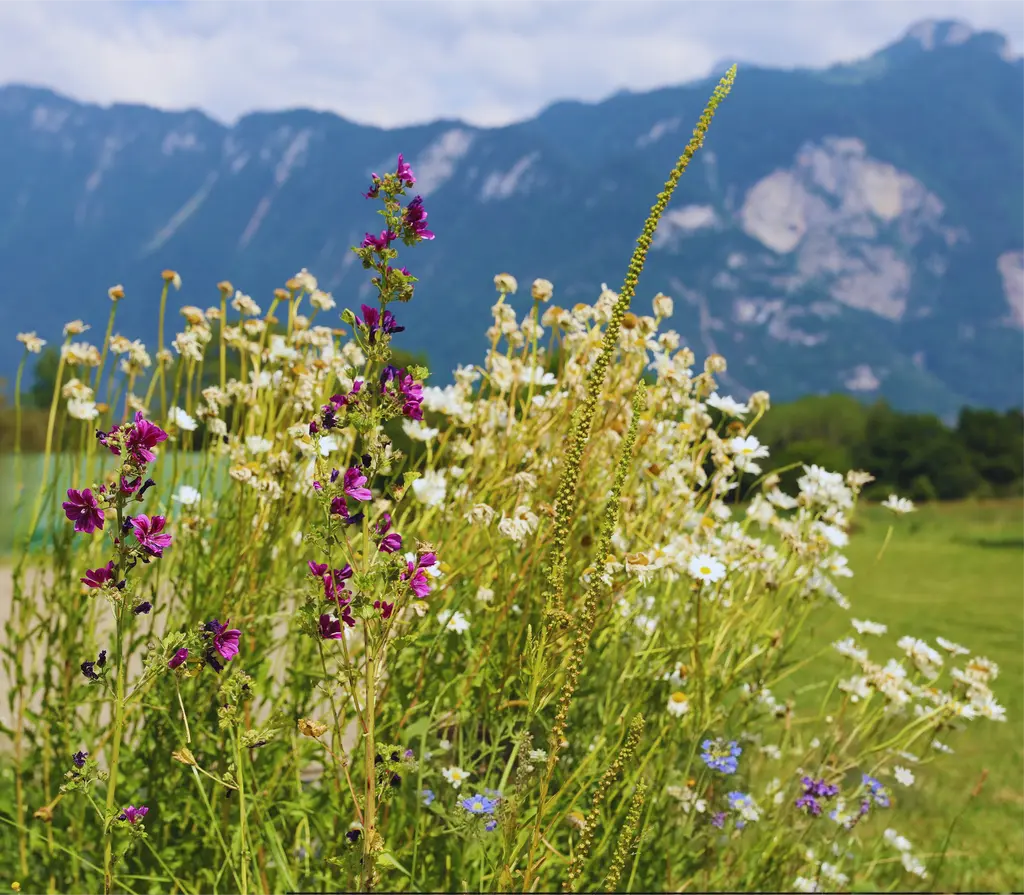
Mix of perennial native flowers of Swiss origin, including mallow, chamomile, mullein...
When and how to sow native species?
Most native flowers can be sown as early as the end of winter and the beginning of spring. Here are some tips for success:
- sow as early as February or March indoors;
- use flexible seed trays or biodegradable cups, which you can plant directly in the ground in the spring;
- label the varieties;
- transplant when the plants are sufficiently developed.
Some species prefer direct sowing in the ground. Refer to the instructions on your seed packets.
Natural gardening: finding the right balance in the vegetable garden
Le jardinage naturel ne consiste pas à exclure toutes les plantes venues d’ailleurs. Par exemple, la tomate est originaire d’Amérique du Sud, mais elle est aujourd’hui incontournable au potager ! De nombreuses espèces non indigènes peuvent aussi rendre de précieux services, comme celles-ci :
- Wild bergamott (very honey-producing)
- phacelia (excellent green fertilizer)
- sunflowers (source of food for birds)
The essential thing is to prioritize diversity and avoid plants that are on the lists of invasive neophytes. Planting a few native flowers and species is already enough to enhance biodiversity. Over the course of gardens, these small actions help preserve a valuable plant heritage. And you, which native flowers do you want to introduce into your organic garden?
Organic seeds of native species in Switzerland
Discover our wide selection of flowers, aromatic herbs, and floral mixes for your organic vegetable garden or balcony. Click on the photo to learn more about the plant:
To go further
- RegioFlora This site helps you find the species best suited to your garden or balcony, based on sunlight, soil, and the wildlife you wish to encourage.
- Info Flora : offers an interactive map showing the distribution of species in Switzerland.
- The cantonal websites allow you to stay informed about the latest invasive species recorded in the area and the best practices to adopt.
Growing native flowers in the sustainable garden