





Considered the most expensive spice in the world, saffron (Crocus sativus) is as intriguing as it is fascinating. Yet growing it remains accessible to anyone with a small garden plot, a sunny balcony or even a few containers. This guide accompanies you step by step, from planting the bulbs to obtaining your first saffron threads, ready to flavour your dishes!
What is saffron and why grow it yourself?
A brief history
Saffron carries with it a long agricultural and cultural history. In France, the Conservatoire du Safran du Quercy works to preserve the know-how and biodiversity associated with this crop, once well established in the Lot region before nearly disappearing in the 19th century. In Switzerland, the city of Basel is associated with a historical episode remembered as the "Saffron War" (Safrankrieg), which occurred in 1374–1375, when a dispute over a shipment of saffron almost escalated into armed conflict between Basel and Mulhouse — a sign of the considerable value attributed to this spice as far back as the Middle Ages.
Saffron from a botanical perspective
Saffron comes from the three red stigmas of the Crocus sativus flower, a bulbous plant belonging to the Iridaceae family. Each flower produces only three fine threads, which explains the spice's high market price: it takes around 150 flowers to obtain a single gram of dried saffron!
Growing your own saffron offers several advantages:
- the guarantee of a fresh and unadulterated spice
- a rewarding gardening experience
- the possibility of building up a personal stock without spending a fortune
A plot of just a few square metres is already enough to produce enough to flavour several dishes a year!
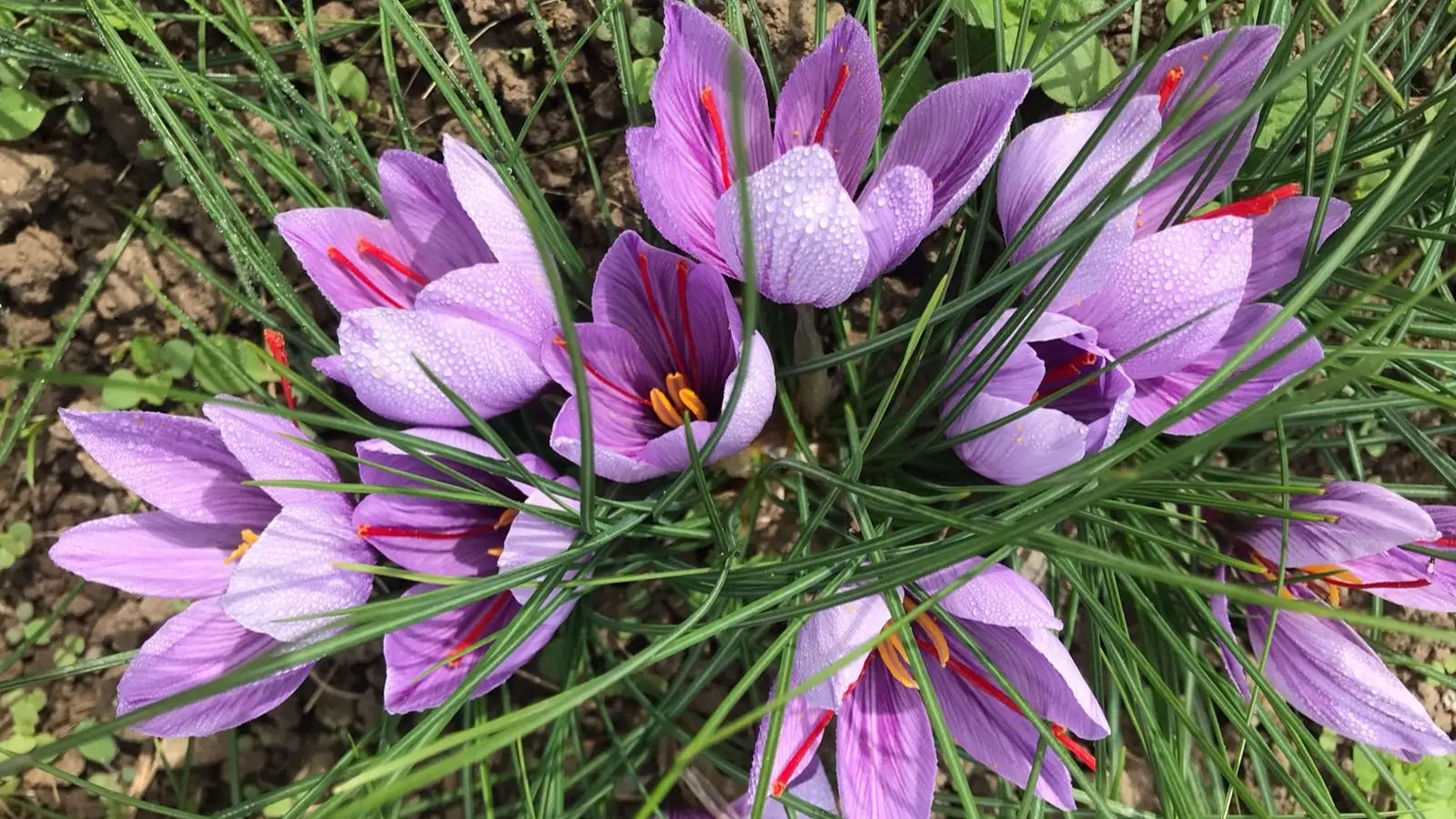
Saffron bulbs in full bloom.
When to plant saffron bulbs?
Saffron bulbs, also called "corms", are planted in summer, ideally between July and August (or September at the latest), for flowering the following autumn, generally in October or November. This characteristic sets saffron apart from other spring-flowering crocuses such as daffodils, tulips, and so on.
Wherever possible, choose organic bulbs from a reputable grower: the quality and health of the bulb directly determine the number of flowers — and therefore the number of saffron threads — you will obtain. A bulb generally produces 1 to 3 flowers in the first year, then 4 to 12 flowers in subsequent years, and can produce up to around fifteen new corms over time.
Choosing and preparing the right location
Exposure and climate
The saffron crocus needs a full-sun position, sheltered from the wind, with hot, dry summers and relatively cold winters. This marked alternation of seasons encourages flowering.
The ideal soil
Above all, saffron fears waterlogging, which causes bulb rot. The soil must be:
- light, sandy or stony
- well draining
- slightly calcareous, with a neutral to slightly alkaline pH
- poor to moderately rich, without excess fresh organic matter
If your soil is heavy or clay-based, improve it with coarse sand, or opt for raised beds, or containers whose base you line with clay pebbles.
Good to know for pot or container growing on a balcony
a bulb planted in a pot requires virtually no maintenance — you plant it, water it lightly at the start of autumn to trigger flowering at the first rains, and that's it. This is in fact a very popular crop even on Parisian rooftops and balconies! Sold in bags of 10 to 15 bulbs, saffron corms make an original and long-lasting gift.
How to plant saffron bulbs
- Work the soil to a depth of 20 to 25 cm to loosen it well and remove large stones and roots from previous crops.
- Dig holes 10 to 15 cm deep, in which you will place the bulb with the tip pointing upwards.
- Space the bulbs 10 to 15 cm apart, and 15 to 20 cm between rows, to allow for their natural multiplication.
- Cover with soil then firm gently.
- Water moderately immediately after planting to encourage rooting, then allow the soil to dry out between waterings.
Caring for the saffron crocus
Watering
Saffron tolerates drought well once established. A light watering at the time of planting and when the leaves appear is generally sufficient — but avoid any excess water, especially in summer when the plant is dormant.
Fertilisation
An application of well-rotted compost or low-nitrogen organic fertiliser at the start of autumn encourages flowering without causing excessive leaf growth at the expense of the flowers.
Weeding and mulching
Keep the plot weed-free, as saffron does not tolerate competition from weeds. Between crops, you can sow flax on the surface to protect the bulbs and avoid leaving the soil bare.
The plant's life cycle
After the autumn flowering, fine, elongated leaves appear and persist through winter and the beginning of spring — the period during which the bulb rebuilds its reserves. The foliage then yellows and disappears in spring: this is perfectly normal; the plant is entering its summer dormancy.
Harvesting saffron: the key moment
When to harvest the flowers
The saffron crocus flowers in autumn, and the flowering period generally lasts two to three weeks, sometimes in a staggered fashion. The flowers must be picked in the morning, as soon as they open and before the sun gets too high, as the stigmas lose quality and aroma as the day progresses.
How to pick the flowers
Pinch the flower gently at the base of the stem, without pulling it off roughly, to preserve the bulb. Harvest every day throughout the entire flowering period, as new flowers appear daily.
Emondage: extracting the stigmas
Emondage consists of separating the three precious red stigmas from the rest of the flower:
- Open each flower gently between your fingers.
- Identify the three bright red threads (the stigmas) at the heart of the flower.
- Pull them gently from the base, avoiding the yellowish-orange style that connects them, which is less fragrant.
- Lay the stigmas out separately, without piling them up.
This meticulous operation explains to a large extent the high price of saffron: it demands time and patience.
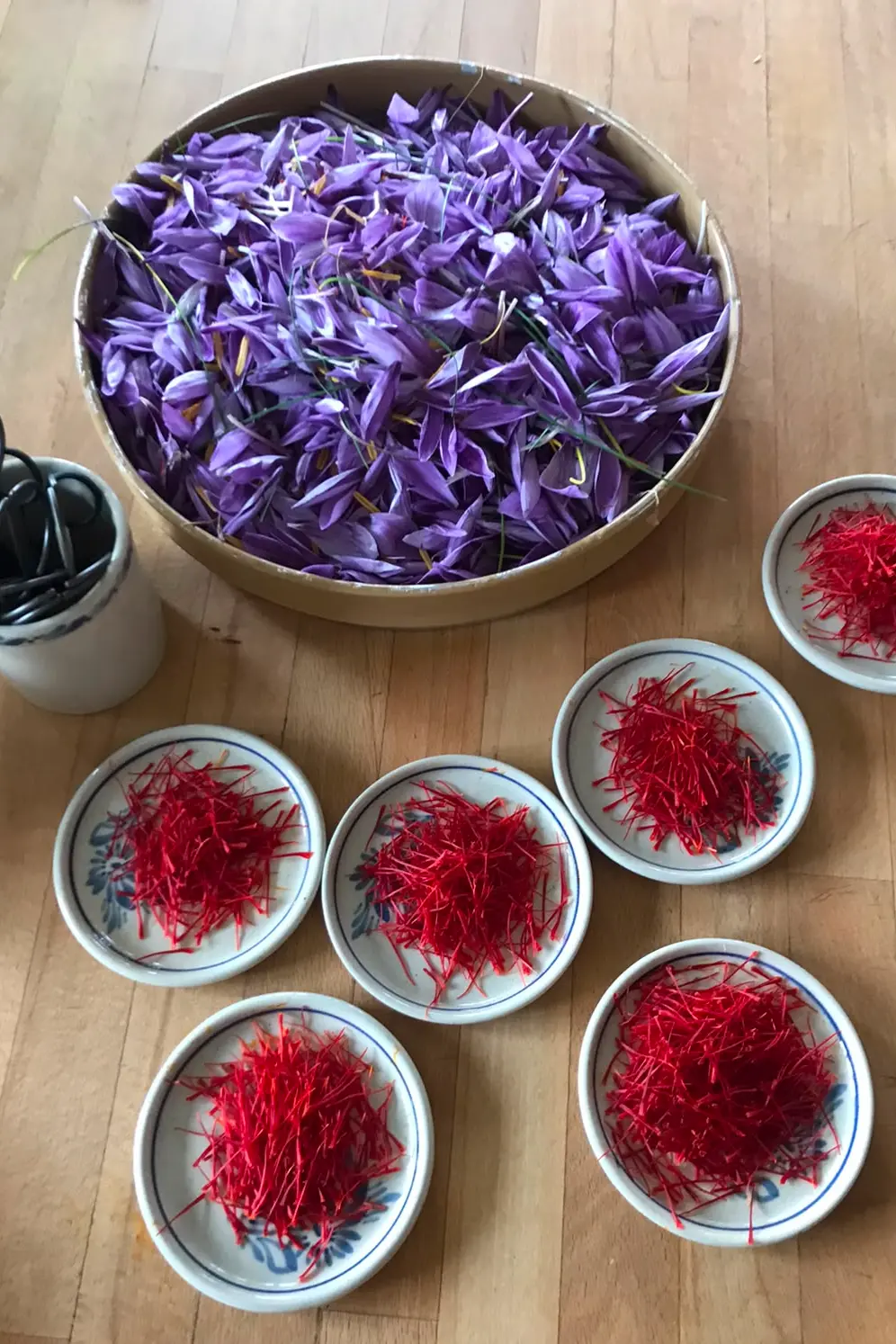
Pruning saffron is a delicate process, which involves harvesting the filaments.
Drying saffron
Drying is a decisive step for the preservation and aromatic concentration of your spice. Through this process, saffron must lose around 80% of its moisture. A quick drying in small quantities at a time is therefore preferable to preserve colour, flavour and aroma.
- Spread a few stigmas in a thin layer on a sieve, a draining rack or absorbent paper.
- Dry them at room temperature, away from light and humidity, for 24 to 48 hours, or use a dehydrator set to a low temperature (35 to 45°C) for 10 to 20 minutes.
- Correctly dried saffron should be light, almost brittle, and display a deep, intense red colour. The threads are ready when they feel brittle to the touch.
Storing your home-grown saffron
Once perfectly dry, store the stigmas in an airtight tinted glass container, away from light, heat and humidity. Well stored, saffron retains its aromatic qualities for one to two years, although its fragrance is at its best during the first few months.
Using saffron in cooking
A few tips to make the most of your harvest:
- Infuse the threads for a few minutes in a warm liquid (water, milk, stock) before incorporating them into a recipe, to fully release their colour and aroma.
- Use sparingly: a few threads are enough to flavour a dish for several people.
- Saffron enhances both savoury dishes (risotto, paella, tagines) and sweet ones (creams, pastries, infusions).
Multiplying your bulbs from year to year
Every three to four years, lift the bulbs during their summer dormancy period to divide them: each original bulb naturally produces several new ones (called "cormlets"). This division allows you to gradually expand your production without new purchases, while also avoiding soil exhaustion and the spread of disease.
Common problems and solutions
Saffron is a plant greatly appreciated by certain pests such as voles, and can be subject to disease. Here is how to spot them and respond correctly.
Problem | Probable cause | Solution |
Bulb rot | Excess moisture, poorly drained soil, water-related diseases (gladiolus sclerotinia, sclerotinia rot…) | Improve drainage (green manures, mulching, compost, sand…) — Space out waterings Adopt crop rotation |
Few or no flowers | Bulbs too young, soil too rich in nitrogen | Wait a season Reduce nitrogen inputs |
Rodent damage | Voles, field mice | Plant in wire mesh baskets Grow in pots |
Conclusion
Growing your own saffron requires patience and care, but remains within reach of any amateur gardener with a well-drained and sunny spot. From the summer planting of the bulbs to the delicate extraction of the stigmas and careful drying, every step contributes to the quality of the spice obtained. With a little practice, your home-grown saffron can rival the best artisan productions and flavour your dishes throughout the year.
Growing Saffron Successfully