




Cabbage butterfly, aphids and cutworms: so many small insects can attack your cabbages' crops, nullifying your efforts. Here are our tips for keeping these common pest insects away and protecting your cabbage crops while respecting biodiversity.
What are the pest insects of cabbage?
- The cabbage looper (Plutella xylostella): Loopers are similar to small moths that lay their eggs on the stems and buds of cabbages. While feeding, the larvae primarily cause deformities in the cabbages, significantly impacting production.
- The cabbage butterfly (Pieris rapae): The whites are white butterflies that lay their eggs on cabbage leaves. The caterpillars that hatch from them feed on the leaves, causing significant damage.
- The beetles (Phyllotreta spp.) : flea beetles feed on the leaves of cabbage. Their larvae can also damage the roots of plants.
- The cabbage fly (Delia radicum): Cabbage flies lay their eggs at the base of cabbage plants. The larvae that hatch from these eggs enter the roots and can cause wilting and rot in the plants.
- The aphids (Aphididae): aphids are small insects that feed on the sap of plants. They can cause a general weakening of cabbages and transmit diseases. White aphids are particularly common on crucifers.
- The cutworms (Agrotis spp.): Cutworms are night-flying moths whose caterpillars feed on cabbage leaves. They can cause significant defoliation.
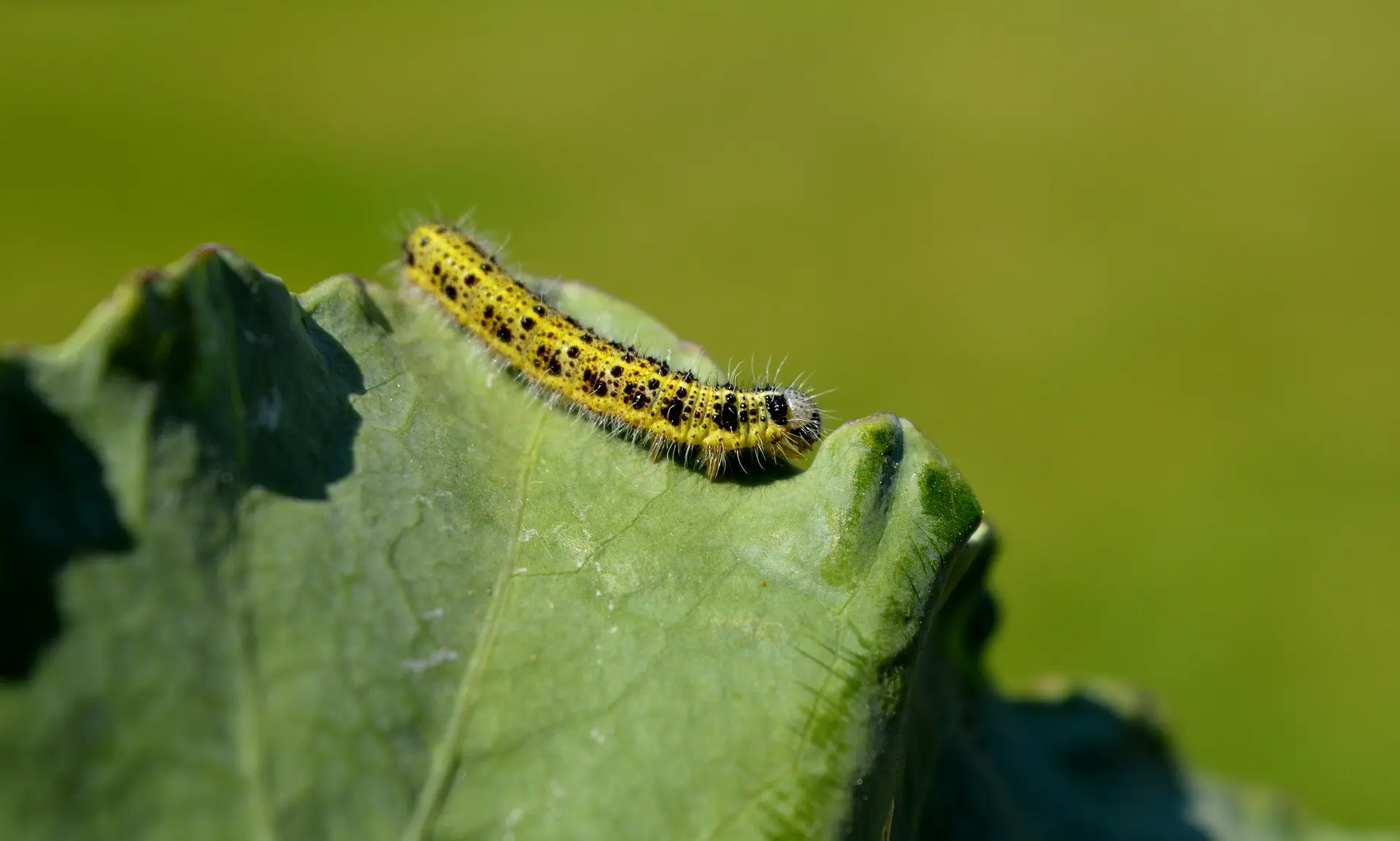
The caterpillar of the cabbage butterfly is very voracious
Flea beetles are often the first to attack, starting with the transplants in May, targeting the young plants freshly put in the ground. The cabbage butterfly takes over in June, with a first peak of laying eggs, followed by a second in August. The cabbage fly, on the other hand, is especially to be monitored at the time of transplanting. For aphids and cutworms, a weekly inspection of the undersides of the leaves allows for the detection of colonies before they settle in. If you spot cabbage butterfly eggs (they look like small yellow cones positioned vertically on the leaves), remove them by hand immediately, before they hatch.
How to fight against these pests?
Crop rotation
When planning your garden, plan a crop rotation to prevent cabbage-specific pests from accumulating in the soil. Maximize the alternation of cabbage crops with other vegetable families to reduce pest pressure. Here on the farm, we wait between four and six years between two cabbage crops. For more tips, check out our blog post on crop rotation in the vegetable garden.
Beneficial associations
Some companion plants can help limit cabbage pests through beneficial interactions. Here are a few examples of companion plants that can be beneficial for cabbages.
- Garlic and onion: Planting garlic and onion near cabbage can repel certain pests, such as aphids and caterpillars.
- Marigold (calendula): Marigold is known for repelling aphids and other harmful insects. It can be planted around cabbages to protect them from infestations.
- Chives: Chives have repellent properties against aphids, flea beetles, and cabbage flies. Planting chives between rows of cabbage can help protect the plants from pests.
- Mint: Mint has a strong scent that can repel certain harmful insects from cabbages. However, it is recommended to plant it in pots or containers as it tends to spread quickly.
- Radishes: Radishes can be used as a "decoy" to attract flea beetles and cabbage flies away from the cabbages. The insects will infest the radishes instead of the cabbages, which can help protect the latter.
- Borage: Borage attracts beneficial pollinator insects, such as bees, which can help with the pollination of cabbages. It can also act as a repellent plant against certain pests.
Promote biodiversity
Biodiversity is the secret to a balanced ecosystem. To chase away pests, welcome their natural predators into your garden. Attract ladybugs, hoverflies, and lacewings by providing them with a comfortable habitat and delightfully fragrant flowers. Plant mixes of flowers to create a true friendly cohabitation where everyone benefits!
Use of physical barriers
Protect your cabbages from cabbage worms and other flying insects by providing them with an insect net. Install it right after planting your seedlings and leave it for a few weeks depending on the growth of the plants.
This net is particularly useful for protecting your cabbages against gall midges, which lay their eggs in the stems and buds, subsequently deforming the cabbages. It is the most reliable and least burdensome method for daily use. The mesh should be less than 1.2 mm: a tight mesh of a maximum of 1.2 mm is recommended to block the path of the cabbage butterfly, flea beetles, cabbage flies, and sawflies. A good quality net, properly maintained, can last between 3 and 5 seasons with regular cleaning, complete drying, and storage away from UV light. Its effectiveness relies on a non-negotiable condition: the net must not touch the leaves, to prevent butterflies or cabbage flies from laying their eggs through the mesh.
Composting and soil care
Let's give our cabbages a boost by providing them with top-quality soil. By nourishing your soil with good compost, you strengthen your plants' natural defenses and help them fend off harmful insects.
Cabbages being very nitrogen-hungry, we recommend providing them with enough fertilizer to make them more robust.
Frequently Asked Questions about Cabbage Pests
The first signs are small irregular holes on the outer leaves, often accompanied by green pellet-like droppings. When you turn over the leaves, you will find either sharp yellow eggs laid vertically or green caterpillars camouflaged in the veins. A leaf reduced to its veins, with no leaf surface, indicates an advanced infestation.
Nettle manure mainly acts as a fortifier and preventive repellent, not as a curative insecticide. In the case of a confirmed infestation, a strong water jet under the leaves to dislodge the colonies, combined with welcoming ladybugs and hoverflies into the garden, yields better results. Diluted black soap can be used for direct spraying on the colonies in case of emergency.
Proteggete i vostri cavoli dagli ospiti indesiderati