




Carrots are among the favourite vegetables of both rabbits and humans — with around seven kilograms consumed per person in 2024. But did you know that their leaves, known as carrot tops or carrot greens, are just as valuable? Too often thrown away, they are in fact highly nutritious and perfectly edible. In this article, we explore their benefits for your health and your rabbit's, and explain how to grow and harvest them easily at home.
What are the nutritional benefits of carrot tops?
Before talking about the greens, let's remember why the carrot itself is a star vegetable. It is particularly rich in:
- Vitamin A, essential for vision, skin and the immune system
- Vitamin C, a powerful antioxidant
- Vitamin K, important for blood clotting
- Potassium, which helps maintain healthy blood pressure
- Fibre, which supports digestive health
Carrot tops share much of this nutritional profile — with the added bonus of a significantly lower sugar content than the root.
Benefits of carrot tops for humans
It's not the first thing that comes to mind, but carrot tops are perfectly edible and deserve a place in your kitchen. They provide:
- Dietary fibre that supports blood sugar regulation and digestion
- Vitamin A, C and potassium, as well as compounds associated with improved immune function
How to cook carrot tops?
Wash them thoroughly, chop them finely and add them to your salads, soups or stews. Their slightly bitter, fresh flavour adds character to many dishes. A practical idea is to make a carrot top pesto to flavour your pasta and salads — an effective and economical way to use every part of the vegetable and reduce food waste.
Benefits of carrot tops for your rabbit
Carrot tops are also an excellent addition to your rabbit's diet. Here's why:
- Healthier than the carrot itself: Lower in sugar and higher in fibre than the root, they are particularly well suited to a rabbit's sensitive digestion.
- Digestive health: Their high fibre content promotes healthy gut transit and helps prevent the gastrointestinal problems that are common in rabbits.
- Dental health: Rabbits have a natural need to chew. Offering hard, fibrous foods like carrot tops helps wear down their continuously growing teeth naturally.
Practical tip: introduce carrot tops gradually into your rabbit's diet to avoid any digestive imbalance, especially if it is a new food for them.
How to grow and harvest carrot tops at home?
Good news: if you have a garden or even a sunny balcony, you can easily grow your own carrots and enjoy their tops. Start by getting hold of good organic carrot seeds to ensure a healthy and tasty harvest.
Sowing and harvesting calendar
Type | Sowing period | Harvest period | Variety example |
Early carrots | March to July | June to October | |
Storage carrots | June to July | From October | Yellow of the Palatinate, Carrot, De Gniff, Berlicumer Selection Z |
Key steps
- Sow your carrot seeds in well-draining soil and keep it moist until germination.
- Immediately protect the seedlings with an insect net to prevent carrot fly.
- Harvest the tops as soon as the plants reach 10 cm in height: cut 5 cm above the base to allow the plant to regrow.
- Repeat: this method allows several harvests of tops from the same plant.
- Wash the tops thoroughly before any use.
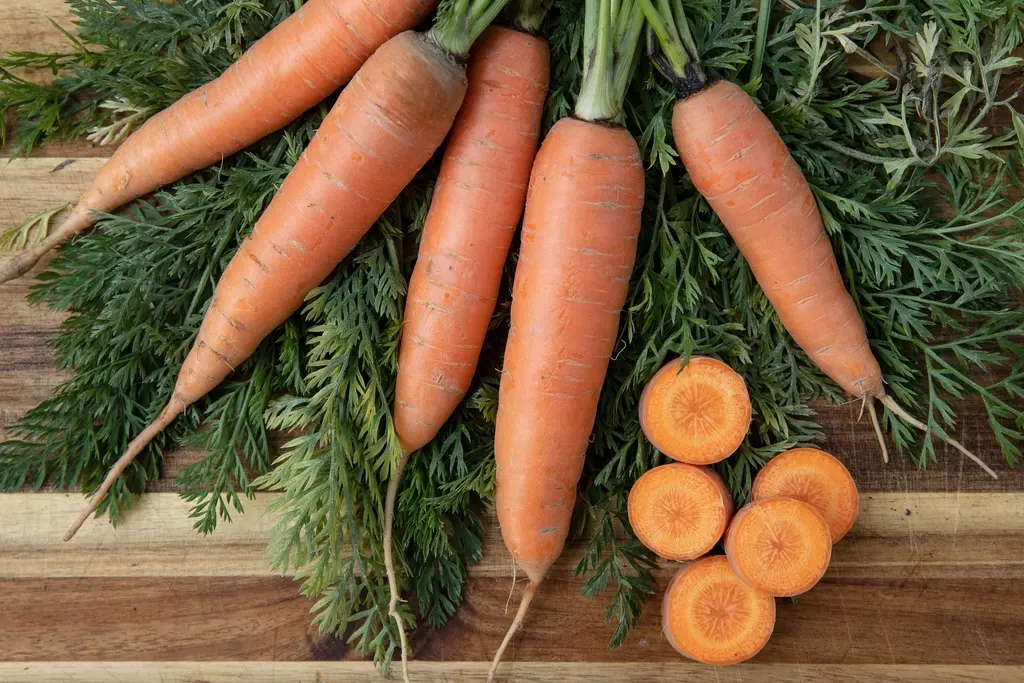
The Tip Top Selection Z carrot: our favourite
The Tip Top Selection Z carrot is an early, crunchy and sweet variety with long, pointed roots of a beautiful deep orange. Until the 1980s, it was the most widely grown early carrot in Europe. We have chosen to keep it alive, because we simply find it better than its modern successors.
Frequently asked questions about carrot top
No. Carrot tops are not toxic to humans. This widespread misconception probably stems from their slightly bitter taste, which some people mistakenly associate with toxicity. Carrot tops are, on the contrary, edible and nutritious. However, make sure to wash them thoroughly before consumption, especially if they are not organically grown.
No — and that is precisely one of the great advantages of carrot tops: they are harvested independently of the root, and much earlier in the season.
Once the plants reach 10 cm in height, you can start cutting the tops. Cut them 5 cm above the base to allow the plant to regrow — this technique allows you to harvest the foliage several times from the same plant throughout its growth.
Yes, carrot tops are among the recommended foods for rabbits and can be given regularly. However, make sure to introduce them gradually.
Carrot tops keep less well than the carrot itself. To maximise their freshness: separate them quickly from the root after purchase or harvest. Wrap them in a damp cloth or paper towel, then place them in the fridge in an airtight bag.
Carrot tops naturally have a slightly bitter taste. To soften it, blanch them for 1 to 2 minutes in boiling water, then immediately plunge them into ice-cold water.
Carrot tops are very versatile in the kitchen. Here are the most popular uses: carrot top pesto, soup or velouté, finely chopped in salads, chimichurri or green sauce as a replacement for or addition to parsley.
Benefits of carrot tops — summary
Carrot tops are a nutritious resource that is too often overlooked, beneficial both for your health and for your rabbit's. Easy to grow at home, they offer a simple and economical way to enrich your diet and that of your animals.
Ready to get started? Discover our selection of organic carrot seeds to grow your own carrots this season.
Benefits of Carrot Tops: Nutrition and Health