





Water is a crucial factor for the healthy growth of plants, whether in the vegetable garden or in pots. Unfortunately, during summer heat waves, it rarely rains, so watering (adapted to the plants' needs and climatic conditions) is necessary. To water properly, you should follow a few recommendations. Here are our tips for watering and some tricks on how to water less often!
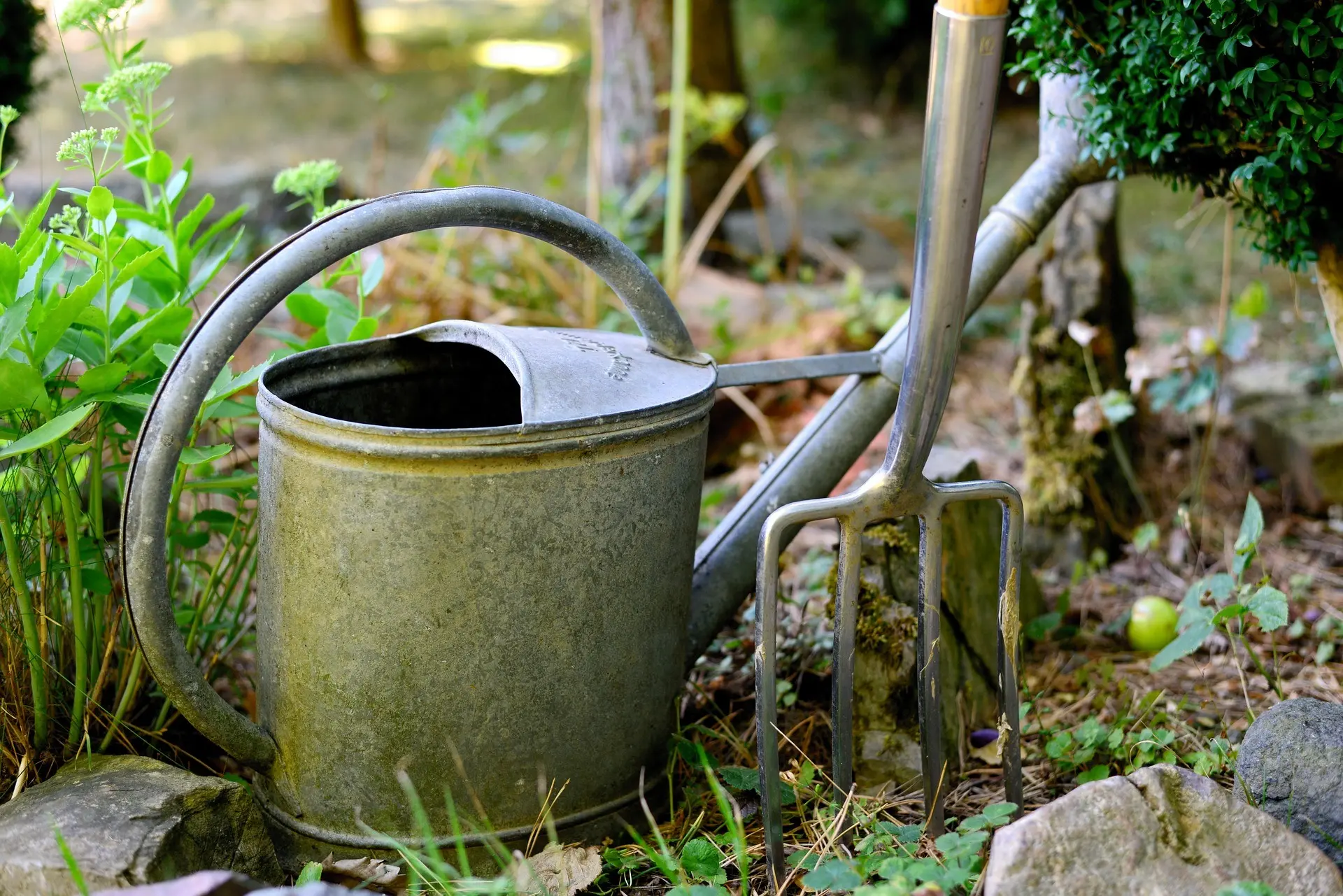
The watering can is the gardener's essential tool throughout the gardening season.
How to water plants properly?
During dry periods, the water reserves in the soil are quickly depleted. To prevent your plants from drying out, water them as needed. Here are some points to keep in mind:
- Water preferably in the early morning or late evening. A sudden watering in the blazing sun can cause stress and weaken your plants.
- Avoid cold showers: just like you, plants prefer warm water. Fill your watering cans in the morning and let them warm up in the sun during the day!
- Avoid wetting the leaves: water as close to the base of the plants as possible, so that the water is available where it is needed — at the roots. Wet leaves are also more susceptible to fungal diseases such as powdery mildrew or downy mildew, especially in tomatoes, zucchini and cucumbers.
- Water is precious, treat it with care! If possible, use rainwater, which is free and much softer. Your soil will thank you for it. Avoid large-scale watering with a sprinkler or nozzle: targeted watering is more efficient and also reduces weed pressure!
How to automate watering?
Watering is important, but it can be very time-consuming depending on the size of the garden. Even worse, a single oversight can leave plants seriously dehydrated! Fortunately, there are simple and effective solutions to automate watering.
Ollas

Ollas plantés entre des pieds de tomates
Ollas (sometimes spelled oyas) are unglazed ceramic or terracotta pots that are buried in the ground. Their porous walls allow water to seep in slowly, keeping the surrounding soil moist for a long period of time. This helps to prevent plants from drying out, even during periods of extreme heat and drought. Ollas also help prevent waterlogging, as water only seeps through when necessary. They save water and ensure even, consistent moisture for your plants. Learn more in our blog post: Ollas in the garden.
Drip irrigation
Drip irrigation is one of the most efficient watering methods for the vegetable garden. It delivers water directly to the base of the plants, right where the roots need it, with no waste. Compared to overhead watering, it can reduce water consumption by 30 to 50% — and it's our favourite solution here on the farm for its practicality. Entry-level kits are available at most garden centres from around twenty francs. An investment that quickly pays off in water savings and time!
How much water do your plants actually need in summer?
The ideal amount of water depends on your soil type, the species you're growing, and the weather conditions. Plants in pots, for example, dry out much faster: some may need daily watering when temperatures exceed 30 °C. Here are some practical guidelines — adjust them to your own situation, varieties and growing methods.
The finger test: your best diagnostic tool
Before watering, push a finger into the soil up to the second knuckle. If the soil feels moist, there's no need to water. If it's dry, it's time to act. This simple gesture prevents both underwatering and overwatering, both of which cause stress to plants.
- Tomatoes : thirsty plants that appreciate regular, deep watering (3 to 5 litres per plant per week). Irregular watering encourages fruit splitting and blossom end rot.
- Zucchini and cucumbers : water generously but avoid wetting the foliage to prevent mildew.
- Carrots and radishes prefer steady, light moisture. Soil that is too dry leads to woody or forked roots.
- Lettuces : sensitive to heat, they can bolt quickly. Water in the evening and consider partial shade.
- Potted plants (cherry tomatoes, peppers, herbs): check substrate moisture every morning by pushing a finger 2 cm into the soil.
Frequently asked questions about summer watering
Early in the morning (before 9 AM) is ideal: the water has time to penetrate the soil before the heat of the day. In the evening (after 7 PM) works too, but it can promote fungal diseases if the leaves stay wet overnight. Absolutely avoid watering in full sun between 11 AM and 5 PM.
The first signs of water stress are: drooping or curling leaves, cracked soil around the base, and a dull grey-green colour in the foliage. If stress is confirmed, water gradually rather than all at once.
Yes, it is one of the most documented practices in organic gardening. Several studies in agronomy have shown that a 7 cm mulch can reduce soil evaporation by 40 to 50% in the summer.
In the absence of rain and with temperatures above 28 °C, plan for 2 to 3 waterings per week for plants in the ground, and daily for potted plants. With mulching, you can often reduce this frequency by half. The best approach is, of course, to conduct your own experiments, as every garden is unique!
Learn more
- Le paillage, pour prendre soin du sol et économiser l'eau !
- Irrigation au goutte à goutte, Mémento de l’agronome, Ministère de la Coopération française, Paris 1980 T-Systems Europe S.A., 7 chemin de Novital, Z.I. la Pointe, 81150, Lespinasse (Toulouse) France.
How to water your plants properly in summer?