




A medicinal herb garden (also called a "physic garden" or "herbalist's garden") brings together aromatic plants and flowers traditionally used in teas, infusions, or cosmetic preparations. How do you create one at home — in your vegetable patch, garden, or on your balcony? Which plant varieties should you choose? When should you sow them? We share all our tips as organic seed growers in this article!
What is a medicinal herb garden?
A medicinal herb garden brings together aromatic plants and flowers known for their traditional uses in teas, infusions, or cosmetic preparations. In the Middle Ages, these gardens were common in monasteries, usually organized into clearly defined square plots near the infirmary. The more informal "curé's garden," linked to small parishes, mixed vegetables, fruit, and a few medicinal plants.
How to create your medicinal herb garden
Step 1: Choose the location and style
Two historical styles can inspire the layout of your space. The first, inherited from the monastic physic garden, relies on clearly defined geometric plots — a bit like a square divided into several small distinct areas. This style works well if you want a dedicated, easy-to-maintain space.
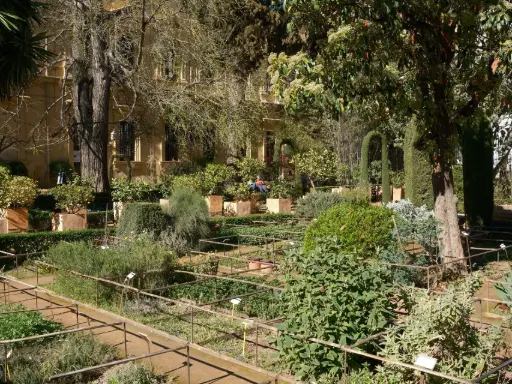
Garden with clearly defined geometric plots.
The second, closer to the "curé's garden," lets medicinal plants mingle with vegetables and flowers. It requires less strict planning and blends easily into an existing vegetable garden. There's also nothing stopping you from simply adding a few medicinal plants along the edge of your vegetable patch, or in pots on a balcony.

Garden where vegetables, flowers, and medicinal plants are mixed together.
Step 2: Choose your medicinal plants
Once you've chosen the location, it's time to decide what to plant. This will depend on the time you have available, your preferences, and of course the type of garden you have. Here's what we recommend at Zollinger Bio depending on your goals.
Based on the time you have
- If you're short on time to maintain your herb garden, or want your plantings to last, we recommend perennial aromatic and medicinal plants : anise hyssop, hyssop, echinacea, lavender, thyme… They require a bit of patience in the first year, but then come back on their own each spring, with limited upkeep.
- Annual plants (basil, dill, calendula, chamomile…) need to be sown every year, which requires more regularity but also makes it easy to change varieties from one season to the next.
Based on your needs
You should also consider the intended use of the medicinal plants you'll grow.
- For digestion and everyday teas, prioritize plants like lemon balm, chamomile, spearmint, basil and hyssop.
- If you're aiming for relaxation and better sleep, true lavender and lemon balm are reliable choices.
- For the winter season, echinacea, thyme and Greek oregano have proven their worth.
- For cosmetic preparations, calendula and marshmallow are traditionally used.
Of course, this information does not replace medical advice. Always consult your doctor or pharmacist before using medicinal plants.
Based on your garden type
For large in-ground gardens
You can grow a wide range of medicinal plant species: anise hyssop, hyssop, echinacea, yarrow, or feverfew. Just be sure to account for their water, nutrient, and light needs.
Medicinal plants recommended for balconies
For balconies or terraces, favor compact varieties that do well in pots, such as basil, dill, lemon balm, or thyme. Choose containers large enough for the more vigorous growers, like anise hyssop.
Recommended varieties of medicinal plants for mountain gardens
For mountain gardens, opt for hardy varieties such as:
- Orach: hardy and generous, its leaves, rich in vitamins, minerals, and antioxidants, are enjoyed in salads or steamed.
- Lovage: its name is thought to come from the Latin levare ("to relieve"). It adapts very well to high-altitude climates and has long been valued for its benefits and flavor.
- Calendula: one of the oldest medicinal plants in Europe, it holds up remarkably well in the mountains.
The 14 best medicinal plants for your garden
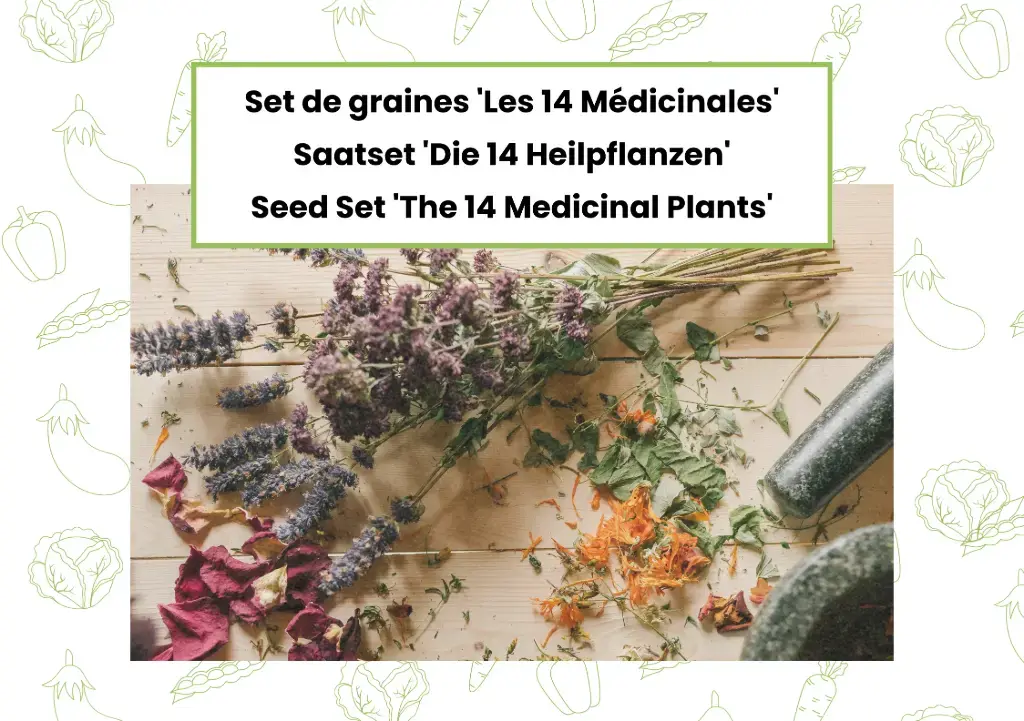
To help you get started, Aurélie, trials manager at Zollinger Bio, has put together a set of 14 medicinal plants with ready-to-sow seeds! It brings together 14 plants long recognized in herbal tradition, such as lavender, chamomile, echinacea, marshmallow, and bee balm. Perfect for turning a corner of your garden into a small, natural herbal apothecary, so you can prepare your own teas and remedies throughout the seasons. Most of these plants are easy to grow and long-lasting once established. They thrive in beds, borders, or pots kept close at hand.
Step 3: Prepare the ground
Once you've chosen your plants, it's time to prepare the ground — ideally in early spring or in autumn, while the soil isn't yet frozen. Here's how to give your medicinal herb garden a good start.
- In the ground: Using a broadfork, loosen the soil to a depth of about 20 cm and remove any weeds or stones that could hinder root growth. If your soil is heavy and clay-rich, work in some sand or gravel to improve drainage — especially important for Mediterranean plants like lavender, thyme, or oregano, which dislike excess moisture around their roots. These same plants don't need particularly rich soil either. Hungrier plants, on the other hand, like lemon balm, marshmallow, bee balm, or chamomile, appreciate soil enriched with well-rotted compost at planting time.
- On the balcony: Get a container that's wide and deep enough for the plants you've chosen. Choose a good all-purpose potting mix, and group plants with similar needs together — for example, lemon balm with spearmint, both of which need plenty of water. On a balcony that gets a lot of summer sun, a light layer of mulch around the base of potted plants will help slow down soil moisture loss.
"Some medicinal plants tend to take up a lot of space over time, like lemon balm, mint, or lovage. I'd recommend growing them in pots to keep their spread under control. Another option is to prune them regularly (often in autumn, with secateurs) to protect the growth of nearby plants. But you can also let them grow freely if you have a larger garden or prefer a wilder result!"

Step 4: Sow or plant your medicinal plants
You can start your own seedlings from organic seed, or opt for quality young plants. Most medicinal plants are sown indoors from March onward, in biodegradable pots or seed trays, then transplanted into the ground from May, once the risk of frost has passed. However, some plants don't tolerate transplanting well and are sown directly in place, such as dill.
Our tips for successfully sowing aromatic and medicinal herbs
If you're short on time or space to start your own seedlings, you can opt for young plantsinstead, which will save you several weeks of growing time — especially for perennials like echinacea or lovage.
Creating a medicinal herb garden doesn't require a large space or special expertise: a few pots on a balcony or a corner of your vegetable patch are enough to get started. What matters most is choosing varieties suited to your available time, your needs, and your location. With good organic seed and a little patience, you'll soon have everything you need to make your own teas and infusions throughout the seasons. Now it's your turn!
To go further
- Le Grand Livre des plantes médicinales à cultiver soi-même, Marie Borrel : https://www.payot.ch/Detail/le_grand_livre_des_plantes_medicinales-marie_borrel-9791028508210 (ISBN 9791028508210)
- Larousse des plantes médicinales, Andrew Chevallier : le slug le plus récemment indexé est légèrement différent de celui qu'on avait retenu — https://www.payot.ch/Detail/larousse_des_plantes_medicinales-chevallier_andrew-9782035930743 (ISBN 9782035930743)
- Jardin des simples (Plantes médicinales), Jardin botanique de Neuchâtel : https://www.jbneuchatel.ch/decouvrez-le-jardin-botanique/les-jardins/jardin-des-simples-plantes-medicinales
Frequently asked questions about medicinal herb gardens
Medicinal plants are mainly sown in March and April, indoors in biodegradable pots or seed trays, for planting out in the ground from May onward.
On a balcony, go for compact, pot-friendly varieties like 'Genovese Selection Z' basil or dill. In the mountains, favor hardy varieties like garden orach, lovage, or 'Officinalis' calendula. In the ground, most species thrive, provided their water and light needs are met.
An aromatic plant is grown mainly for its fragrance and culinary use, while a medicinal plant is selected for its documented properties, used in teas, infusions, or cosmetic preparations. Some plants, like basil or dill, fall into both categories.
The information shared in this guide is for educational and informational purposes only and does not constitute medical advice. It is recommended to consult a doctor or healthcare professional before using medicinal plants.
Creating a Medicinal Herb Garden: The Complete Guide